Scroll through active condo listings at a certain 19-story building near North and Harlem long enough, and you will start to see the same line repeated with small variations. One unit notes about seven years left on a special assessment, adding roughly $141 a month to the dues. Another lists monthly assessments that jumped from $530 to $790 because of the same charge. A commercial unit for sale in the same tower states plainly that the buyer will take over the special assessment at closing. Different units, different agents, same building, same story.
That building is Cameo Towers, a 19-story condominium at 7234 W North Ave built in 1964. It is one of the more recognizable addresses in Elmwood Park, and it happens to be a useful teaching example, because most of what buyers assume about special assessments gets it backward. The instinct is to treat any assessment as a warning sign and move on to the next listing. The building that should actually worry you is the one with no assessment and no way to explain why.
A special assessment is a symptom, not a diagnosis
A special assessment is a one-time or scheduled charge a condo association levies when regular dues and reserves cannot cover a project, usually a roof, an elevator, a boiler, or masonry work. On its own, that tells you almost nothing about whether the building is well run. What matters is what produced the charge and whether the board can show its work.
At Cameo Towers, the picture is unusually clear. Multiple current listings describe the same underlying assessment and the same rough timeline, even though the dollar amount differs by unit, which is normal since special assessments are typically split according to each unit's share of ownership rather than charged as a flat fee. A studio paying $141 extra a month and a larger two-bedroom absorbing a bigger jump both point back to the same project. That kind of consistent story across different sellers and different agents is worth more to a buyer than the absence of a charge at some other building down the street where nobody can tell you when the roof was last replaced.
Why this shows up more often in Elmwood Park than in newer suburbs
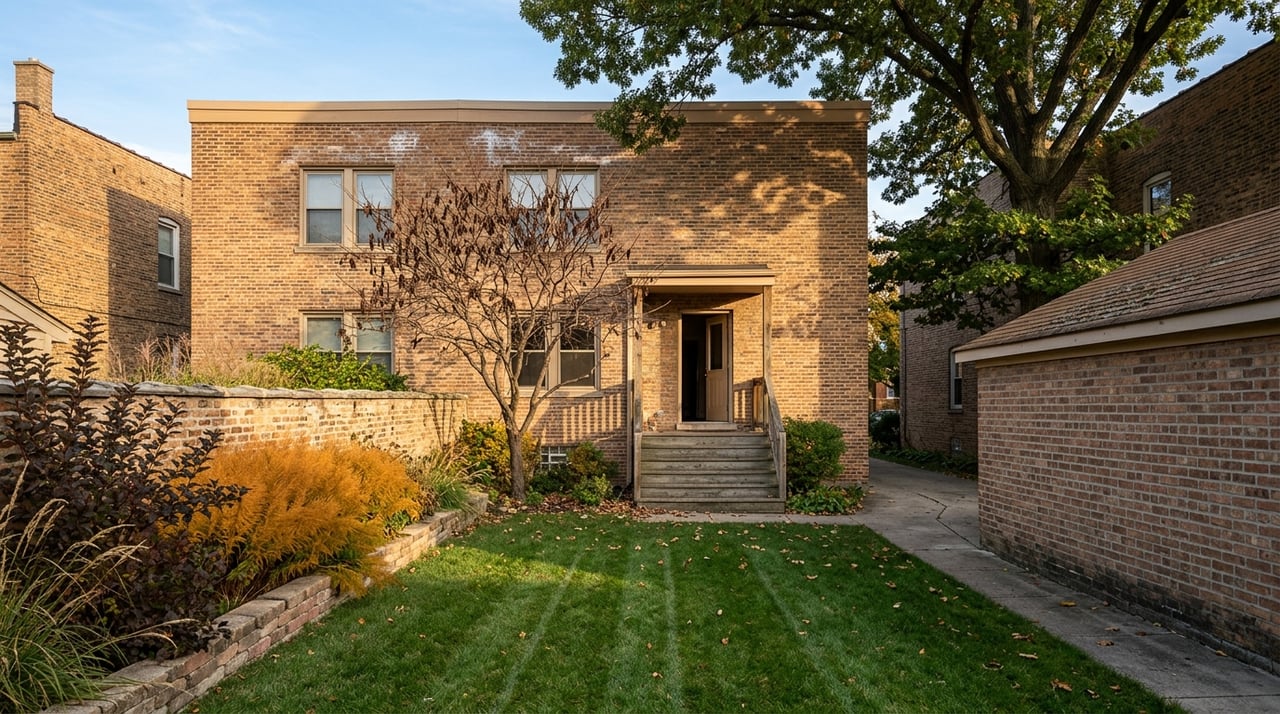
Elmwood Park's condo stock skews older, and the village has a real split in building age depending on which side of North Avenue you are standing on. South of North Avenue, the housing is dominated by post-World War II brick homes. North of it, the mix shifts toward 1920s frame buildings and three and four-flats. North Avenue itself is the dividing line, and Cameo Towers has stood right on that line since 1964. Cook County winters put real stress on stock this old. Freeze and thaw cycles work on masonry, roofing, and building envelopes year after year, and buildings from the 1920s through the 1960s are due for that kind of capital work on a schedule that newer construction simply has not reached yet.
That is not a reason to avoid older buildings in Elmwood Park. It is a reason to expect that a well-managed one will eventually levy an assessment, and to treat the ones that never have as needing a harder look, not an easier pass.
The legal blind spot buyers do not expect
Here is the part most buyers do not know until they are already under contract. Illinois law requires condo boards to budget for reasonable reserves and to disclose the current reserve balance in the annual budget, along with whether that reserve is funded according to a plan based on a study. What the law does not require, at least not yet, is that the study actually exists.
A bill that would change that, House Bill 2563 alongside its Senate companion SB 1703, would require associations with significant shared infrastructure to commission a reserve study every five years and make it available to prospective buyers on request. As of the 2025-2026 legislative session, that bill remains parked in the House Rules Committee. You can check its status directly on the Illinois General Assembly's bill tracker. If it eventually passes, associations without a study on file would have until January 2028 to get one done. Until then, a board can legally check the box that says no reserve study exists and move on.
That gap is exactly why a documented, currently active assessment like the one at Cameo Towers can actually be reassuring. The board is not hiding behind a vague reserve line. It has already identified a cost, quantified it, and put a timeline on it. A building with a clean-looking budget and no reserve study to back it up is the one where you genuinely do not know what you are walking into.
What this means for your offer
None of this means you should accept an assessment without doing your own math. It means the questions worth asking are different from the ones most buyers start with.
Before you write an offer on any Elmwood Park condo, ask for:
- The most recent annual budget and reserve disclosure, including whether the board states a reserve study exists
- Board meeting minutes from the past 12 to 24 months, which will show whether an assessment is being discussed before it is voted
- A written statement of any current or anticipated special assessment, including total cost, remaining balance, and monthly amount
- Proof of permits and completed work if a project tied to an assessment has already started, since the Village of Elmwood Park's Code Administration and Building Department handles permitting and can confirm a project's status
- Whether the assessment transfers to you at closing, stays with the seller, or splits, since Elmwood Park listings show all three arrangements depending on the building and the deal
If an assessment is active, you have real leverage, not just a reason to walk. Sellers in buildings with a known, quantified assessment routinely agree to pay it off at closing, offer a credit toward your closing costs, or set up an escrow holdback that covers your share while the building finishes the work. What you should not do is take a seller's or listing agent's word that "it's almost paid off" without seeing the board's own numbers.
Where this gets harder to judge
Not every building is as transparent as Cameo Towers happens to be right now. Smaller associations, especially ones with just a handful of units, are more likely to lean on a management company rather than a dedicated finance committee, and that can mean thinner records and less consistent disclosure from one seller to the next. If you are looking at a three or four-flat conversion on Elmwood Park's north side rather than a large high-rise, budget extra time to track down minutes and financials, because there may be less of a paper trail to begin with.
FAQ
Does a special assessment automatically transfer to a new buyer? It depends on the building's governing documents and the terms negotiated in your specific contract. Some Elmwood Park listings show the seller paying off the assessment before closing. Others show the buyer assuming the remaining balance. Get this in writing before you remove your attorney review contingency.
Does Illinois require condo boards to have a reserve study? Not currently. Boards must disclose their reserve balance and state whether it follows a study-based plan, but the underlying study itself is not yet mandated. Pending legislation would change that if it passes, with a compliance deadline of January 2028.
Is an active special assessment a reason to walk away from a condo? Not by itself. A documented, quantified assessment with clear minutes and a visible payment schedule tells you more about a board's competence than a building with no assessment and no records to explain why.
If you are weighing a condo purchase in Elmwood Park and want a second set of eyes on a building's financials before you write an offer, Antonio Sarmiento can help you read the paperwork, ask the right questions of the board, and structure an offer that accounts for what you find. Let's Connect.