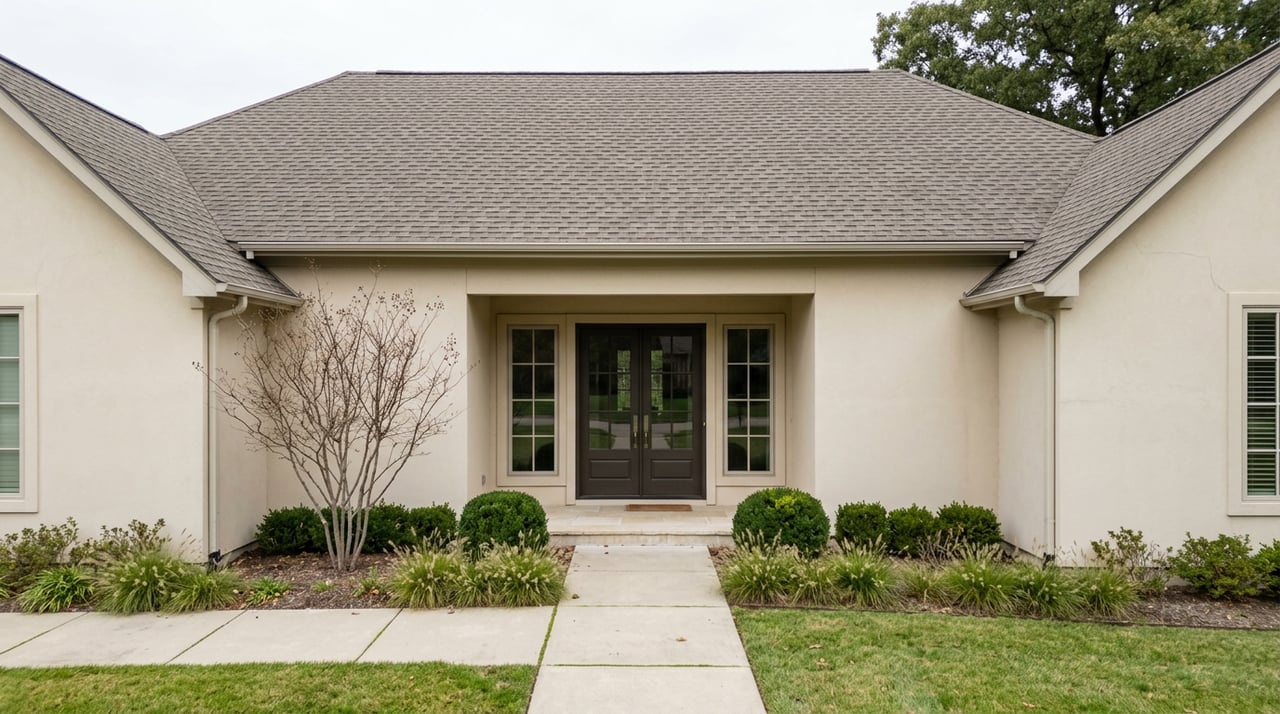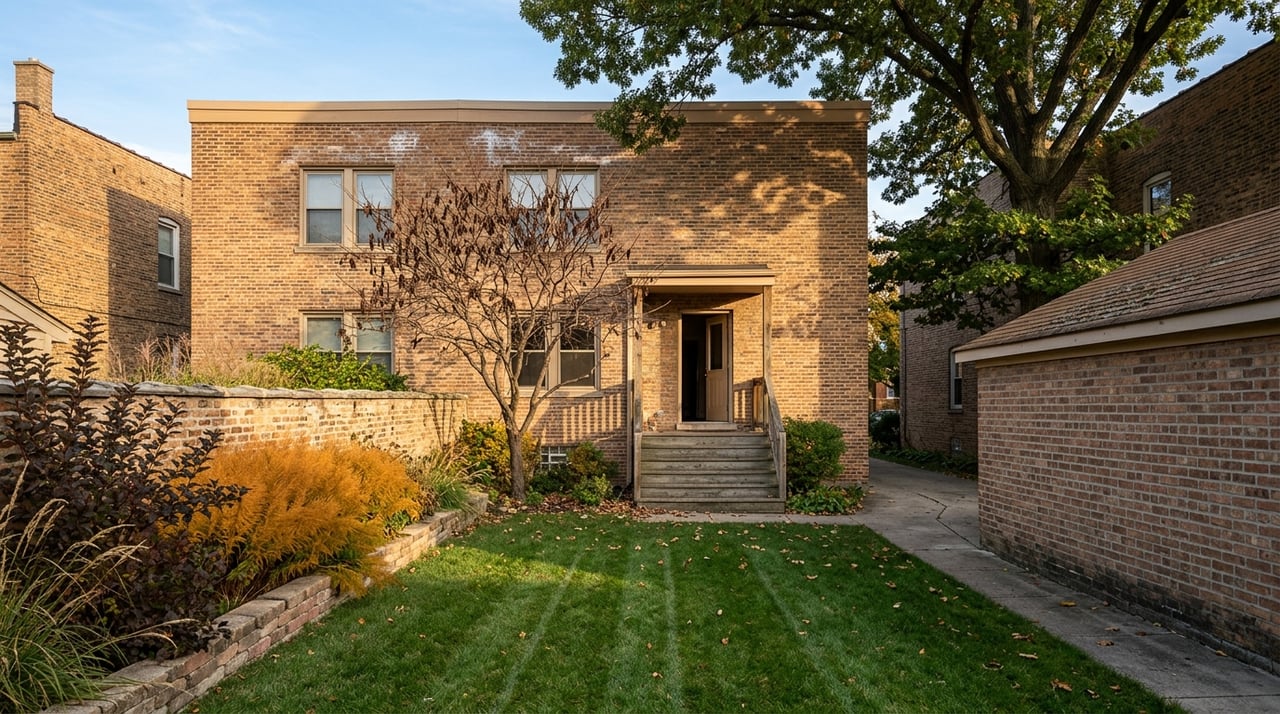
Ask three different data sources what a home costs in Belmont Cragin right now and you'll get three different numbers within the same six-month window. That's not sloppy reporting. It's a market moving fast enough that the snapshot changes before the ink dries.
But the number that actually matters isn't the median price. It's the gap between two medians, and what that gap is doing to who's winning and who's waiting.
The Price Gap Is Smaller Than It Looks
Most buyers walk into Belmont Cragin assuming a two-flat or three-flat will cost roughly double a single-family home. That assumption holds in a lot of Chicago neighborhoods. It doesn't hold here.
Recent single-family sale data has put the neighborhood's median somewhere in the $385,000 to $405,000 range depending on the reporting window, with one December 2025 reading at $385,000 (up 8% year over year) and a mid-2026 Redfin read closer to $405,000 (up 19.1% from the prior year). Multi-family listings, meanwhile, have carried a median asking price around $499,000 to $500,000 as of early 2026, with the full range running from roughly $299,000 up to $1.3 million for larger buildings.
Do the subtraction and the premium for a 2-4 flat over a single-family home lands around $100,000 to $115,000, not the two-to-one multiple buyers expect. For someone planning to live in one unit and rent the other, that's a materially smaller reach than the sticker price suggests, especially once you factor in the rental income offsetting the mortgage on unit two.
Why the Two-Flats Are Selling Faster
Here's the part that should change how you plan your search.
Belmont Cragin's overall single-family market has been described as "somewhat competitive," with homes typically taking around 66 days to sell. That's a reasonable pace, not a frenzy.
The multi-family slice of the same neighborhood is running on a different clock entirely. Recent Redfin data on Belmont Cragin's multi-unit listings showed homes staying on market a median of just 40 days and receiving a median of 8 offers each. That's not the same market wearing a different label. That's investor capital moving faster than owner-occupant demand, in the same zip codes, on the same streets.
The reason isn't a mystery once you look at what's driving it. Citywide multifamily rent growth ran 4.6% year over year in Q3 2025, with another 3% forecast for 2026, according to CBRE, and the firm has pointed to multifamily supply sitting at its lowest point since the 2008 financial crisis. Belmont Cragin's vintage 2-4 flat stock, much of it built during the neighborhood's early 20th-century bungalow boom, sits right in the workforce housing segment that CBRE says is most undersupplied. Investors who track that data aren't waiting around.
You can see it in an actual transaction. In December 2025, Greenstone Partners closed on a 6-unit building at 2057-59 N. LeClaire Avenue for $825,000, describing it as a value-add acquisition on a property with long-term ownership and rents sitting below current market rates. That's the exact profile drawing capital into the neighborhood right now: older buildings, patient prior owners, rents with room to move up.
| Single-family homes | 2-4 unit multi-family | |
|---|---|---|
| Recent median price | ~$385K-$405K | ~$499K-$500K |
| Typical days on market | ~66 days | ~40 days |
| Typical offers received | Not separately tracked | ~8 offers |
The takeaway isn't that Belmont Cragin is expensive. It's that the segment buyers assume is the pricier, slower-moving option is actually the one moving fastest.
What 1.8 Months of Inventory Means for Your Timeline
A July 2026 absorption-rate report on Belmont Cragin put the neighborhood at 1.8 months of inventory across all property segments, the kind of number that signals demand outpacing supply and conditions that favor sellers. In practical terms, that means homes are moving before most buyers finish their second showing, and price reductions are the exception rather than the rule.
If you're planning to house-hack a 2-flat, this changes your prep timeline more than your budget. Financing needs to be lined up before you start touring, not after you find the one you want. Waiving contingencies isn't a strategy anyone should take lightly, but knowing the offer count you're likely up against (that 8-offer median isn't a typo) means walking in with a clean, well-supported offer from day one rather than testing the water with a lowball.
If You're House-Hacking Your First Property
The math here is more forgiving than it looks on paper. A $100,000 to $115,000 gap between a single-family home and a 2-4 flat is a gap that rental income on the second unit can close quickly, especially with rents citywide still climbing. Belmont Cragin's transit access supports that rental case directly: CTA Blue Line service reaches the Loop in roughly 25 to 30 minutes, and Metra's Milwaukee District-West and North Central Service both stop at Hanson Park and Grand/Cicero, giving a second-unit tenant a real commute option without a car.
The neighborhood's recent public investment adds to the case for staying power rather than betting on a turnaround. Cragin Park's fieldhouse renovation landed in 2024, Riis Park opened a new water park in 2025, and Aguijón Theater along with the Northwest Side CDC's business incubation programs have kept a working creative and small-business economy active in the area. None of that shows up in a median price, but it's the kind of groundwork that keeps rental demand steady rather than speculative.
If You're Building a Small Portfolio
For an investor comparing Belmont Cragin against other Northwest Side value-add targets, the Greenstone Partners transaction on LeClaire Avenue is worth studying as a template, not a one-off. Below-market rents on a long-held building, a straightforward reposition play, and a price point still well under $1 million for six units. That's a repeatable structure, and the 40-day, 8-offer pace on multi-family listings suggests other investors have already noticed.
The friction to plan for isn't financing or inspection. It's speed. If you're underwriting a deal on a 30-day due diligence timeline while the building down the street just went under contract in three weeks with a stack of competing offers, your model needs to account for a faster close than you'd budget for in a slower submarket.
FAQ
Why are two-flats selling faster than single-family homes in Belmont Cragin right now? Investor demand is chasing tight citywide multifamily supply and rising rents, and Belmont Cragin's vintage 2-4 flat stock sits in exactly the price range and building type that segment is targeting. Owner-occupant demand for single-family homes is steady but moving at a more typical pace by comparison.
How much should I actually budget for a 2-4 flat in Belmont Cragin today? Recent multi-family listings have carried a median asking price near $499,000 to $500,000, with the full range running from roughly $299,000 for smaller buildings up to $1.3 million for larger ones. Where a specific building lands in that range depends heavily on unit count, condition, and whether rents are already at market rate or still have room to grow.
If you're weighing a single-family home against a two-flat in Belmont Cragin, or trying to figure out whether the numbers on a specific building actually work, that's the kind of question worth talking through before you make an offer, not after. Antonio Sarmiento has spent over a decade walking Chicago's Northwest Side blocks and can help you read a listing the way an investor would, whether you're buying your first unit to live in or your fifth to rent out. Let's Connect.