Looking for a Chicago neighborhood where outdoor space is part of your daily routine, not just a weekend extra? In Humboldt Park, green space shapes how you move through the day, from morning walks and bike rides to casual meetups, community events, and quick stops along nearby commercial corridors. If you want a feel for what everyday life here is really like, this guide will show you how the park, surrounding streets, and local institutions all come together. Let’s dive in.
Humboldt Park Sets the Pace
Humboldt Park revolves around Alexander Von Humboldt Park, a 197.26-acre public park in the middle of the neighborhood. According to the Chicago Park District, the park is open daily from 6:00 a.m. to 11:00 p.m., which gives you a wide window to use it before work, after school, or in the evening.
This is not just a patch of grass with a few benches. The park includes a historic fieldhouse with a fitness center, two gymnasiums, meeting rooms, an inland beach, lagoons, a boathouse, soccer and baseball fields, tennis courts, playgrounds, and Little Cubs Field. That range of amenities helps explain why the park feels woven into daily life instead of separate from it.
For many residents, the park works like a neighborhood living room. People come for walking, picnicking, fishing, birdwatching, paddling, and simply spending time outdoors. In warmer months, the pace picks up with day camp, after-school programs, Movies in the Park, Shakespeare in the Park, the Latin Jazz Festival, and the Puerto Rican Festival.
Green Space Goes Beyond One Park
While the main park is the neighborhood’s anchor, it is not the only outdoor feature shaping daily life. Choose Chicago notes that The 606 runs along Humboldt Park’s northern edge, adding another route for walking, running, and biking.
That wider green network matters if you are thinking about how a neighborhood feels day to day. In Humboldt Park, outdoor activity is not boxed into one destination. It extends into the streetscape, nearby trails, and the routine ways people move between home, errands, and places to gather.
Choose Chicago also points to Humboldt Boulevard as part of that experience, with a grassy, historic streetscape that supports the area’s park-centered identity. In practical terms, you get a neighborhood where open space is visible and useful in more than one form.
Division Street Brings Daily Energy
A big part of everyday life near Humboldt Park’s green spaces happens along Division Street, especially Paseo Boricua. This six-block stretch between Western and California is marked by large Puerto Rican flag sculptures and is recognized by Choose Chicago as the only official Puerto Rican Cultural District in the United States.
That corridor adds texture to daily life in a way that feels immediate and local. You will find street art, coffee shops, Puerto Rican cafes, community spaces, murals, and family-owned restaurants clustered together. The result is a neighborhood rhythm where outdoor time and local business activity often overlap.
Choose Chicago also highlights places like Mercado del Pueblo, a rotating marketplace for local artisans, and La Casita de Don Pedro, which includes a public gallery, garden, and performance space. These are the kinds of places that make the neighborhood feel active between major events and festivals.
Food and Culture Stay Close to Home
Dining is a major part of Humboldt Park’s identity, especially around Paseo Boricua. Choose Chicago says the area has the city’s largest concentration of Puerto Rican eateries, including restaurants, bakeries, sandwich shops, pastry shops, cafes, and food trucks.
That matters when you think about livability. In some neighborhoods, parks and restaurants feel disconnected from each other. In Humboldt Park, it is easier to picture a normal day that includes a walk through green space, a stop for coffee, lunch from a neighborhood spot, and an event or casual meetup later on.
Choose Chicago points to examples like Cafe Colao, Nellie’s, Roeser’s Bakery, and Papa’s Cache Sabroso. Together, they help show how food is part of the neighborhood’s everyday routine, not just something visitors seek out.
Public Institutions Add Convenience
Everyday life in Humboldt Park is not only about recreation and dining. Public institutions also play a big role in how convenient the neighborhood feels.
The Humboldt Park branch of the Chicago Public Library, located at 1605 N. Troy Street, offers free library cards, Wi-Fi, computers, study rooms, a meeting room, a seed library, Spanish-language materials, and regular community programming. The branch also includes YOUmedia, a digital learning space designed for teens.
For residents, that means the neighborhood offers more than housing and park access. It also supports day-to-day needs like internet access, quiet work space, learning resources, and community programming in one local branch.
The library’s current building opened in 1996 and expanded in 2013 with sustainable features, according to the Chicago Public Library. Its art, funded through the city’s Percent for Art program, adds another reminder that civic spaces in Humboldt Park often blend practical use with culture and design.
Museums and Community Spaces Matter Too
The National Museum of Puerto Rican Arts and Culture adds another layer to life around the park. It is located in the historic Humboldt Park Receptory and Stables at the western gateway of Paseo Boricua, which places it right near the neighborhood’s cultural core.
The museum offers free admission, exhibitions, education, and community programming. Its current hours are Tuesday through Thursday from 10:00 a.m. to 5:00 p.m., Friday from 10:00 a.m. to 4:00 p.m., and Saturday from 10:00 a.m. to 2:00 p.m.
For someone considering a move, that kind of nearby access can shape how connected a neighborhood feels. It gives you another place to spend time, learn, and participate in community life without needing a major outing.
What Housing Looks Like Here
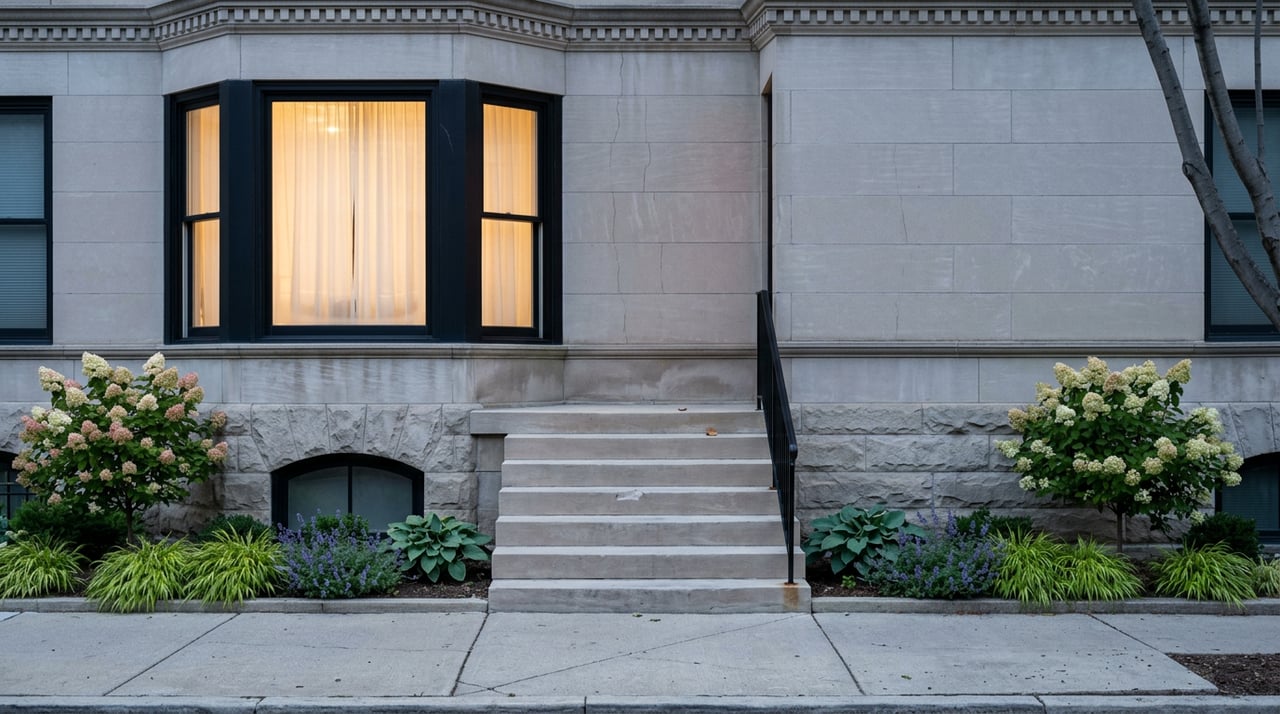
If you are thinking about buying in Humboldt Park, the housing mix helps explain the neighborhood’s physical character. CMAP’s April 2025 Local Housing Profile shows that 57.5% of housing units are in 2- to 4-unit buildings, while 23.2% are single-unit homes, 15.7% are in 5- to 49-unit buildings, and 3.3% are in buildings with 50 or more units.
That points to a neighborhood with a strong low-rise, multi-unit pattern rather than a high-rise feel. It also fits the block-by-block experience many buyers notice when they explore Humboldt Park in person.
The age of the housing stock is another important factor. CMAP reports that 60.7% of units were built in 1939 or earlier, and the median year built is 1940. In plain terms, many homes here are part of an older housing stock, so layout, condition, updates, and maintenance can vary quite a bit from one property to the next.
Buyer Context: Prices and Ownership Mix
Humboldt Park is a renter-leaning neighborhood. CMAP reports that 60.7% of occupied households are renter-occupied, while 39.3% are owner-occupied.
For buyers, the price picture is best understood as a range because different sources track different things. CMAP reports a 2022 median residential sales price of $303,500 and a 2022-2023 median purchase price of $365,000 for recent one- to four-unit home purchase loans.
A separate data point from Zillow’s Humboldt Park home-value index shows an average home value of $409,667 as of April 30, 2026, up 6.9% year over year. Those numbers are not direct equivalents, but together they suggest that buyers should expect variation based on property type, size, condition, and exact location within the neighborhood.
For renters, CMAP reports a 2023 median gross rent of $1,328. That broader housing picture helps explain why Humboldt Park can appeal to a mix of first-time buyers, condo shoppers, and buyers looking at vintage multi-unit opportunities.
Why Green Space Changes Daily Life
The biggest lifestyle takeaway is simple: in Humboldt Park, green space is not just scenery. It shapes how the neighborhood functions.
You have a large central park with broad recreational use, a nearby trail connection through The 606, a historic boulevard streetscape, and a cultural corridor where food, art, and gathering spaces stay close to the neighborhood’s outdoor core. That combination creates a sense of movement and connection that many buyers look for when choosing where to live.
If you are comparing Chicago neighborhoods, Humboldt Park stands out for how naturally park life, cultural life, and everyday errands can fit into the same routine. That is often what makes a place feel livable long after the moving boxes are gone.
If you want help understanding how Humboldt Park fits your budget, lifestyle, or home search goals, connect with Antonio Sarmiento. He can help you look at the numbers, the housing options, and the neighborhood details with a clear plan.
FAQs
What is everyday life like near Humboldt Park in Chicago?
- Everyday life in Humboldt Park is centered on outdoor space, local dining, cultural activity, and public institutions like the library and museum, with the park serving as a daily gathering place.
What outdoor spaces are near Humboldt Park homes?
- The neighborhood’s main outdoor anchors are the 197.26-acre Humboldt Park, The 606 along the northern edge, and the grassy historic streetscape along Humboldt Boulevard.
What types of homes are common in Humboldt Park?
- According to CMAP, the most common housing type is 2- to 4-unit buildings, which make up 57.5% of units, with smaller shares of single-unit homes and larger multifamily buildings.
Is Humboldt Park mostly renters or homeowners?
- CMAP reports that 60.7% of occupied households are renter-occupied and 39.3% are owner-occupied, so the neighborhood currently leans renter.
What home prices should buyers expect in Humboldt Park?
- Public data shows a range, including a 2022 median residential sales price of $303,500, a 2022-2023 median purchase price of $365,000 for one- to four-unit purchase loans, and Zillow’s April 2026 average home value of $409,667.
What cultural spots are close to Humboldt Park green spaces?
- Key nearby cultural destinations include Paseo Boricua on Division Street and the National Museum of Puerto Rican Arts and Culture, along with murals, cafes, artisan markets, and community spaces in the corridor.